Scripture
Lesson Summary
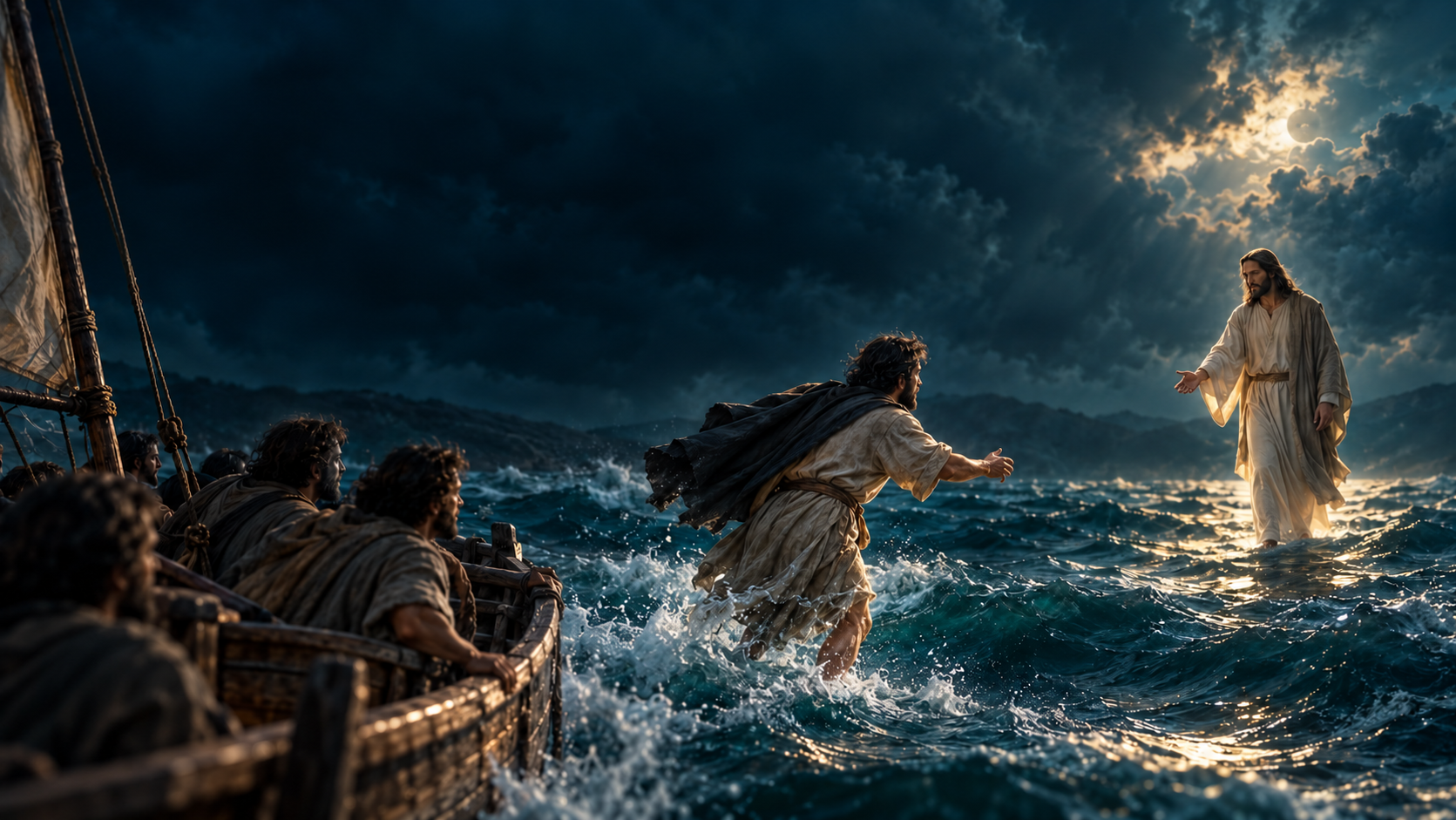
The disciples obeyed Jesus by crossing the lake, yet they still found themselves struggling against the wind and waves. When Jesus came walking on the sea, He revealed His authority over creation. Peter stepped out of the boat because Jesus commanded him to come. His confidence rested in Jesus, not in his own abilities.
Faith is trust in action, based on who Jesus is. It means recognizing Jesus, listening to His Word, and acting in obedience. Faith is not reckless behaviour or a way to make God fulfil our wishes. It trusts His sovereignty even when circumstances remain difficult.
When Peter became afraid and began to sink, he cried, “Lord, save me.” Jesus immediately rescued him and challenged his doubt. Following Jesus does not require flawless faith; it involves growing trust and returning to Him when we stumble. The account ends with the disciples worshipping Jesus and confessing that He is the Son of God. His identity calls us to trust, worship, and obey Him.
Small Group Questions
Understanding & Application
- The disciples encountered the storm while obeying Jesus. How does this challenge the idea that following Him should make life easy?
- Peter waited for Jesus to say, “Come.” What is the difference between acting in faith and taking a reckless risk? How can Scripture help us recognize the difference?
- What might your “boat” represent—comfort, control, reputation, or something else? What clear act of obedience could require you to leave that security?
- When Peter began sinking, he cried out to Jesus. When fear, doubt, or failure grows in your life, where do you usually turn? What does Jesus’ response encourage you to do?
- The disciples ended by worshipping Jesus as the Son of God. How should recognizing His identity change the way you approach one situation you are facing this week?